
(16 minutes reading time)
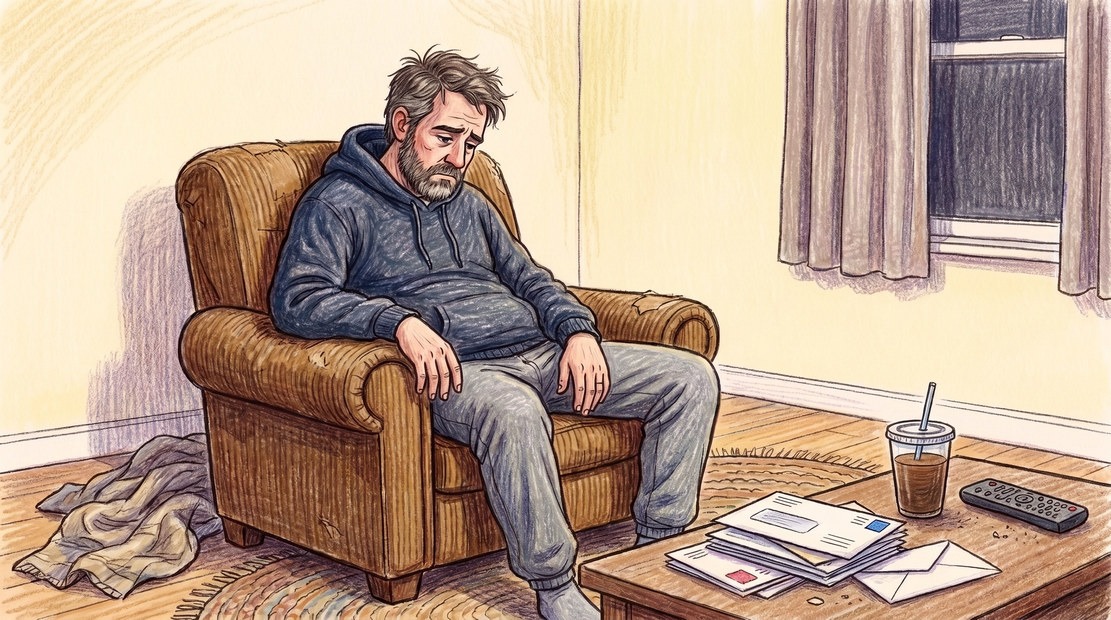
There are days when everything seems okay on the surface. And yet, we sense that something feels strangely heavy. The project that excited us two weeks ago is still sitting there, and we lack the creative inspiration or motivation to continue working on it. We go through our day. Life goes on. Nobody around us would suspect a thing. But something underneath is feeling a little duller than usual.
We are all familiar with these kinds of feelings. Sometimes they last a few days. Sometimes they stretch quietly across weeks or even months, settling in so gradually that we barely notice.
More Than Just a Bad Mood?
A low mood, reduced energy and a loss of inspiration are not like light switches that are either fully on or fully off. They exist on a wide human spectrum, and almost everyone moves along that spectrum at different points in life, in response to loss, rejection, burnout, major life changes, or sometimes for no clear reason at all.
What we call ‘depression’ in its clinical sense is therefore not some foreign world that only other people inhabit. It is the intensified version of something that every human being has experienced. Understanding it – even if we have never received a diagnosis – is a way of gaining a more honest insight into ourselves and showing more compassion towards those around you.
The difference between experiencing a few difficult weeks and having a depressive episode is not so much about the type of experience, but its depth and persistence. What matters is the extent to which it begins to affect our daily lives and sense of self.
When a low mood deepens and remains consistent for two weeks or more, it begins to take on a recognisable form.
What Depression Actually Looks Like
For a diagnosis of a major depressive episode, someone must experience at least five of the following symptoms most of the time, including either a heaviness of mood or a loss of interest or pleasure:
- A heaviness of mood: not just sadness, but a general feeling of emptiness or hopelessness that colours the whole day, day after day.
- Loss of interest or pleasure: things that once felt meaningful, joyful, or engaging – work, creativity, connection, intimacy – begin to feel flat or unreachable.
- Exhaustion without clear cause: a tiredness that sleep doesn’t fix; even simple tasks feel disproportionately challenging.
- Feelings of worthlessness or guilt: a persistent inner voice that says you are failing, a burden, or somehow responsible for things beyond your control.
- Difficulty thinking or deciding: the mind becomes slow, foggy, or circling, and concentrating on anything or making even small decisions feels unusually difficult.
- Sleep disturbances: most commonly lying awake or waking up too early and being unable to get back to sleep, though some people sleep far more than usual.
- Changes in appetite or weight: often a loss of hunger and weight, though some find themselves eating more, especially when mood fluctuates.
- A visible slowing down: speech, movement, and responses become noticeably slower. Alternatively, a restless agitation sets in.
- Thoughts of death or not wanting to be here: in its more serious form, depression can manifest as a quiet or loud questioning about whether life feels worth continuing.
Less Common Symptoms
Not everyone with regular depression experiences these symptoms, but they appear frequently enough to be clinically associated with the condition:
- Emotional numbness: a sense of inner blankness or unreality rather than active sadness; feeling cut off from life and others.
- Social withdrawal: pulling away from friends, family, and events, not out of preference but out of a heavy inability to engage.
- Reckless or self-destructive behaviour: substance use, overspending, or risk-taking as unconscious attempts to feel something.
- Loss of libido: reduced or absent sexual interest and responsiveness.
- Irritability and anger: especially common in men and adolescents, who may present with frustration and outbursts rather than tearfulness.
- Unexplained physical pain: headaches, muscle pain, joint aches, or digestive problems that have no clear medical cause.
- Constipation and digestive sluggishness as part of the broader slowing of bodily processes.
- Sense of unreality or depersonalisation: feeling detached from one’s own body, thoughts, or surroundings.
The Many Different Faces
Depression affects everyone differently. Some are clearly struggling. Others seem completely fine on the outside. Some feel deeply sad, while others feel mostly numb, as though life has been turned down to a low volume. Some withdraw entirely, while others continue with their daily lives but are becoming increasingly hollow inside. There are also persistent depressive disorder, seasonal depression and premenstrual dysphoric disorder, among others.
Someone with smiling depression carries the full weight of major depression internally – feelings of worthlessness and hopelessness, loss of pleasure, and sometimes suicidal thoughts – but appears to the outside world as happy, composed, and often quite successful. The smile is not a sign of mild depression; it is a coping mask often worn by people with a strong sense of duty to appear ‘fine’, or by those with a deep fear of being seen as weak or a burden to others. In some ways, this makes it more dangerous than openly expressed depression because neither those affected nor their loved ones take their inner experience seriously enough to seek help.
Atypical Depression: Good Moments & Persistent Shadows
Atypical depression is the most widespread form of depression, yet the least recognised. The term ‘atypical’ is misleading; it suggests something rare, but this subtype accounts for around 30% of all depressions. It is atypical because it behaves differently from the classical picture.
The defining feature is mood reactivity, or the ability to experience authentic joy in response to positive events, engaging conversations, beautiful moments or anticipated pleasures. Someone with atypical depression may laugh at the dinner table, feel excited about a new project or enjoy a good afternoon, but then wake up the next morning feeling down again.
This is precisely what makes the atypical depression so easy to dismiss:
I can’t be depressed – I had a great evening yesterday.
However, underneath that surface lies a persistent undercurrent. Energy levels and creative motivation are lower than they should be. Sleep may be longer, but it often doesn’t feel sufficiently restorative. For some, the body may feel physically heavy at times, as if the limbs are made of something denser than usual.
One of the most telling yet under-discussed symptoms of atypical depression is an intense sensitivity to perceived rejection or criticism, which can quietly shape relationships, limit creative risk-taking and make vulnerability feel dangerous.
For many high-functioning people, the most recognisable version of this is a slow, creeping loss of motivation and inspiration that doesn’t feel like a crisis, but which persistently dims what was once alive. The work is mostly still getting done. Life is still functioning. But the inner engine – the curiosity, the drive and the sense that things matter – has gone quiet in a way that it never used to.
Alongside the core characteristics of atypical depression, a number of other symptoms frequently appear. Beneath the mood reactivity, there may be a persistent undercurrent of sadness or hopelessness, accompanied by a quiet inner conviction that things will not really improve. Anxiety is common and can manifest as social insecurity or heightened sensitivity to how one comes across to others. Frustration and irritability may flare up more easily than usual, while low self-esteem and a nagging sense of inadequacy tend to colour daily life. The mind may feel foggy and slow, and decisions may feel more difficult than they should. Memory may also become less reliable. Physical fatigue can be pronounced, reinforcing the pull towards isolation. For some, food becomes a coping mechanism: they eat impulsively or in excess as an unconscious response to emotional discomfort.
Where Does That Leave You?
You don’t need a diagnosis to find something useful in what you have just read. The most important question is not Do I have depression?, but something simpler and more honest: Has any part of this resonated with something I recognise in myself?
None of these recognitions require a label. They are simply invitations to look more honestly at what is happening inside and to consider whether what you have been calling ‘just a difficult phase’ deserves more attention and care.
What Is Happening in the Brain?
Depression is not simply a matter of attitude or willpower. It involves measurable changes to the way the brain’s chemical messengers work. The three key molecules are:
- Serotonin, which regulates mood stability, sleep, and a sense of inner calm;
- Dopamine, which drives motivation, curiosity, pleasure, and the feeling that things are worth pursuing; and
- Norepinephrine, which governs alertness, energy levels, and the drive to engage.
In a healthy brain, these neurotransmitters are released, received and recycled in a finely tuned balance.
In depression, however, this balance shifts – some signals weaken, while others become overactive – resulting in the feelings of heaviness, flatness, or emptiness that we experience due to this chemical imbalance.
Modern research has revised the outdated but still popular view that depression is simply caused by low serotonin levels. The relationship is more complex. Depression involves changes in neurotransmitter levels and brain structure, inflammation, glutamate signalling and connectivity between brain regions. For atypical depression, research suggests that deficient serotonergic activity, elevated MAO activity, and altered GABA and glutamate signalling in the motor cortex are key features.
How Medication Tries to Help
Most antidepressants work by making these neurotransmitters more available in the spaces between nerve cells. SSRIs (selective serotonin reuptake inhibitors – such as Prozac, Zoloft, or Citalopram) block the recycling of serotonin, leaving more of it active in the brain. They also often flatten the emotional range in both directions.
SNRIs (serotonin–norepinephrine reuptake inhibitors, such as venlafaxine and duloxetine) affect both serotonin and norepinephrine. They can be effective when low energy and poor concentration are prominent issues.
These medications can help some people. But they come at a cost. The most commonly reported side effects of SSRIs and SNRIs include nausea, headaches, disrupted sleep, changes in weight, increased sweating and, perhaps most significantly, sexual dysfunction. This can include reduced libido, difficulty with arousal and delayed or absent orgasm. Some people experience emotional blunting, which dampens not just the lows, but the full emotional range, including joy, creativity, and felt connection. Furthermore, stopping medication is rarely straightforward: discontinuing SSRIs too quickly can trigger dizziness, anxiety, and flu-like symptoms that can last for weeks.
A third class of antidepressant works differently. Bupropion (sold under names such as Wellbutrin) is a dopamine and norepinephrine reuptake inhibitor, which leaves more of these molecules active in the brain. This targets motivation, energy and reward circuitry rather than primarily affecting serotonin. This makes it particularly relevant for atypical depression, which is characterised by flatness, low drive and a loss of pleasure rather than anxiety or sadness.
Its side-effect profile is much gentler. In fact, many patients reported heightened sexual functioning, which is in direct contrast to the suppressive effects of SSRIs.
Bupropion enhances positive emotional processing by increasing the brain’s response to rewarding and pleasurable stimuli without numbing negative ones. Perhaps most remarkably, it appears to go beyond merely managing symptoms by actively promoting neuroplasticity, or the brain’s ability to reorganise and grow. After just six weeks of treatment, increases in grey matter, white matter, and total brain volume have been observed, alongside improvements in the prefrontal and striatal regions associated with creativity and executive function.
Medicines From Nature
Although herbal treatments are often dismissed as gentler and weaker alternatives, many of them are highly effective.
- St. John’s Wort (Hypericum perforatum) has been more rigorously studied than almost any other herbal remedy. Its effectiveness in treating mild-to-moderate depression is comparable to that of SSRIs, and it has a significantly more tolerable side-effect profile. In Germany, it is widely prescribed by conventional doctors as a first-line treatment.
- Saffron (Crocus sativus, 30 mg/day) – the same deep-red spice used in cooking – has demonstrated antidepressant properties comparable to those of conventional medications. Notably, it appears to be particularly effective in treating atypical depression.
- Curcumin, the active compound in turmeric, produced significant improvements in depressive symptoms after eight weeks at a dosage of 500 mg twice daily. Those with atypical depression responded especially well, suggesting that curcumin may specifically address the dopaminergic and inflammatory pathways that are most active in this form of depression.
- Rhodiola Rosea is an adaptogenic herb with a long history in Russian and Scandinavian medicine. It works by regulating the body’s stress response systems, thereby reducing the fatigue, mental fog and mood disruption that accumulate under chronic stress – making it particularly relevant for depression associated with burnout.
- Lavender (Lavandula angustifolia), taken in concentrated oral form, has demonstrated benefits for both anxiety and depression comparable to standard anxiolytics and antidepressants – without the sedation, dependence risk, or withdrawal effects associated with conventional options.
- Passionflower, often combined with saffron, is one of the best-studied herbal remedies for anxiety and depression, which often occur together. This herbal combination consistently shows a more favourable balance of benefit and risk than pharmaceutical alternatives.
- Lithium orotate contains trace amounts of lithium, a naturally occurring mineral that supports neuroplasticity and promotes the growth of new brain cells. It may be able to do something that few natural remedies can claim: not only ease depression, but also reverse some of the structural changes it leaves behind.
How Saffron Works With Your Brain
Saffron supplements containing 30 mg or more per capsule work on the brain and nervous system through their key active compounds, primarily crocin and safranal. They help to create a more positive mood by acting in several key ways:
- Balancing Brain Messengers (Neurotransmitters): Saffron influences key neurotransmitters that regulate mood:
- Serotonin, often called the “feel-good” chemical, is linked to well-being and happiness. Crocin and safranal help maintain healthy serotonin levels.
- Dopamine and norepinephrine are involved in motivation, focus, and energy. Saffron can help keep these messengers active for longer.
- Saffron protects brain cells. It acts as a powerful antioxidant, reducing oxidative stress and inflammation in the brain which are often associated with low mood.
- It may help to regulate the body’s stress hormone, cortisol, thereby promoting a feeling of calm.
Taking a saffron capsule in the morning is more effective in aligning with the body’s natural daily rhythms than taking it in the evening, as this could potentially interfere with the sleep cycle.
Sensitive individuals may experience an immediate effect within 30 minutes to a few hours of taking a capsule of saffron. This acute effect is thought to be related to its stress-reducing properties and quick influence on the heart rate during stressful situations.
For long-term, lasting results, it generally takes time for significant and stable improvements in mood to build up. Clinical studies demonstrating the effectiveness of saffron in supporting mood typically involve a daily dose of 30 mg for six to eight weeks. Therefore, to experience the full benefits, it is best to take it consistently for at least a few months.
When Chemistry and Consciousness Work Together
Once the symptoms have lifted, it is possible to establish new routines, practise emotional regulation, engage more authentically in relationships and participate more fully in life. These behavioural changes create their own neurological imprints, which can last longer than the effects of the medication itself. This is why a combination of medication and psychotherapy consistently achieves better long-term outcomes than either approach alone: the medication opens the door, and therapy walks through it.
When the Human Body Becomes the Medicine
Although medicinal treatment can be a valuable bridge, it only addresses the chemistry, leaving the underlying patterns, relational wounds and unmet needs largely untouched. However, there is another way to influence these same molecules. Not through a pill, but through the oldest form of human medicine: being held in trust and comfort.
A conscious hugging meditation of 30 minutes or more – particularly when combined with heart-centred breathing and full presence – sets off a neurochemical cascade that reaches every system that antidepressants attempt to influence, and several they do not:
- Oxytocin, also known as the ‘bonding molecule’, is the brain’s primary signal for safety and trust. It quiets the amygdala (the brain’s threat-detection centre), reduces cortisol levels and allows the nervous system to enter a state of deep relaxation. No antidepressant affects this system directly.
- Serotonin, the molecule that SSRIs aim to preserve, increases naturally with safe, sustained touch. This close connection becomes the delivery mechanism itself, with no prescription required.
- Dopamine is released through the brain’s reward circuitry in response to closeness and connection. It is restored not by blocking its reabsorption, but by providing the brain with a meaningful reason to produce it. Longer embraces generate a more significant dopamine response than brief ones.
- Norepinephrine, the molecule responsible for alertness, motivation and engagement, is stimulated through vagal activation, which is directly triggered by conscious, heart-centred breathing. This is the same pathway that selective serotonin reuptake inhibitors (SSRIs) and bupropion target in pharmaceutical form.
- Endorphins, the brain’s natural pain relievers and pleasure generators, increase during prolonged physical contact. This produces a soothing comfort and ease that cannot be replicated by any pharmaceutical drug.
- GABA, the primary calming neurotransmitter in the nervous system, is consistently reduced in cases of depression and anxiety. Levels can be increased measurably through conscious breathing practices and meditative stillness.
- Cortisol, the body’s primary stress hormone which is chronically elevated in depression, drops measurably with regular, sustained touch. After just four weeks of 30-minute reciprocal embrace sessions, researchers observed significant reductions in cortisol levels, blood pressure and other stress indicators. The body literally begins to calm down.
What makes hugging meditation remarkable is that it works with the body’s own intelligence rather than overriding it, reaching the relational and emotional roots that chemistry alone cannot touch.
Moving Into Experience
Reading about connection is one thing. Feeling it is another.
For those who want to experience holding hands, heart-centred breathing and longer hugging meditations in a safe and conscious space, sessions are available at Finca Sanuela in Tenerife.
A training path is available for those who feel drawn to offer this kind of embodied presence to others. It leads to becoming an Energetic Heart & Soul Companion who creates a safe space where others can be held in trust and care, allowing them to open up and come home to themselves.
The most important step is asking yourself a quiet, honest question about what you actually need deep down.


